

Bringing Your Pet Home After Surgery
Upon returning home, please keep your pet calm, warm, and comfortable. Provide a soft, clean bed in a quiet, draft-free area for the next 48 hours. Unless instructed otherwise, offer your pet fresh water as soon as you arrive home. After a few hours, you may provide a small meal. It is important to keep your pet indoors overnight, or for a longer period if advised. For cats, ensure they have access to a litter tray, and take dogs outside on a lead for toilet breaks. Please discourage any jumping or activities that may stretch the surgical site, especially during the first few days post-operation. Avoid feeding bones during this recovery week.
What can I feed my pet tonight?
Anaesthesia can sometimes cause nausea. Offer your pet a small meal of soft food on the night of surgery to minimise the risk of vomiting. If they are not interested in eating, don’t worry—try offering food again before bedtime. Always ensure they have access to fresh water. By the next day, your pet should be eating and drinking normally. If you have any concerns about your pet's recovery, please contact the vet hospital.
My pet seems a little sleepy, is this normal?
Pets vary in how they metabolise anaesthetic drugs. Most will be bright and alert within a few hours, while some may experience lethargy for 1-2 days post-surgery. Over the next 24 hours, their behaviour should normalise. If you have any concerns, please do not hesitate to reach out.
My Pet Has a Cough; Should I Be Concerned?
If your pet underwent general anaesthetic, they may have had a tube placed in their trachea (windpipe), which can lead to mild irritation and a slight cough. This should resolve within 2-3 days; however, if the cough persists, please contact us.
Why has my pet’s foreleg been clipped?
The foreleg is clipped where fluids and anaesthetic were administered into the vein. There may also be a small dressing on the leg, which can be removed upon arriving home unless instructed otherwise.
What If My Pet Licks Their Wound or Chews Their Stitches?
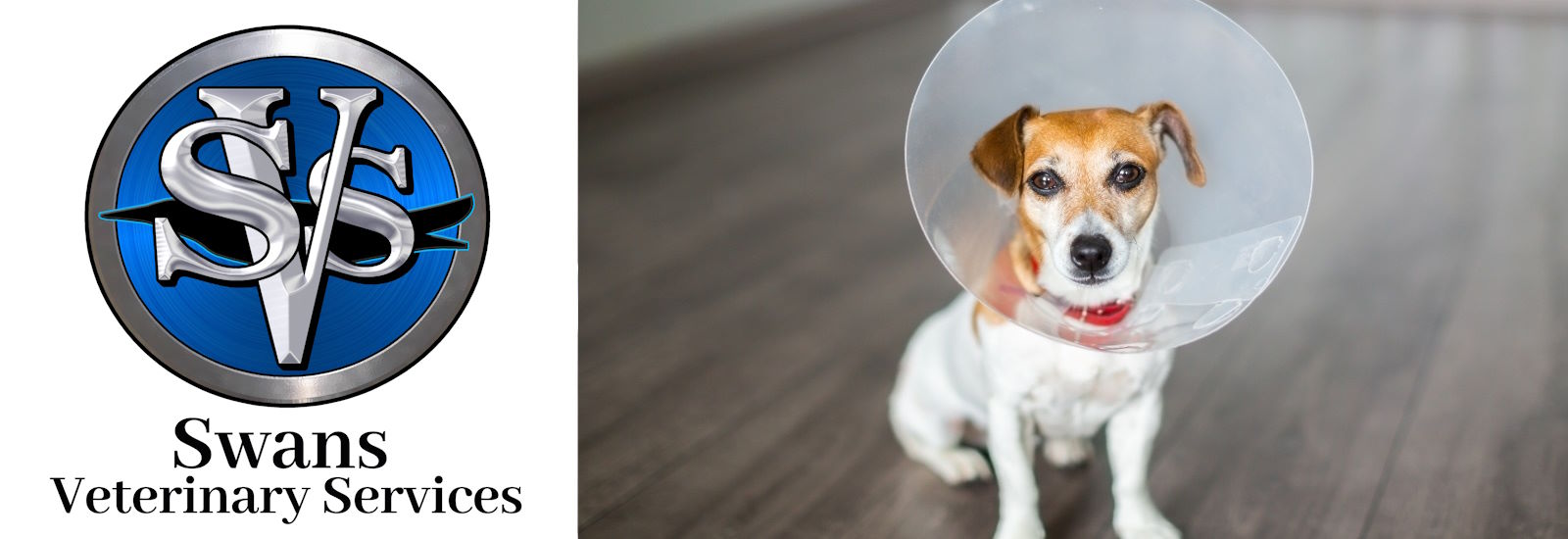
If you received an Elizabethan collar to prevent your pet from chewing, please ensure it is used. Initially, many pets find these collars unusual and may try to remove them. However, most will adjust quickly. It is best to keep the collar on continuously rather than removing it intermittently, as just a few moments of unobserved chewing can lead to complications.
We also offer Copper body suits for post-operative care, available at varying prices based on your pet's size. If your pet interferes with their wound, please contact us as soon as possible.
Do I Need to Return for Suture Removal?
In our routine spey and castration surgeries your pet will likely have internal sutures; therefore, suture removal is not required. Your pet is not allowed to swim or be bathed for 10 days following surgery. In other procedures skin sutures or staples may be used to close the wound. In this case you will be informed when to return for suture removal. Usually this is around 14 days post op.
Contact the vet hospital immediately if you notice any of the following at the surgical site: continuous seepage or a large quantity of blood, intermittent blood seepage lasting more than 24 hours, excessive swelling, excessive redness, or discharge.
When can my pet resume a normal active life?
We recommend keeping your pet calm and quiet for 10 days post-surgery to support healing. For cats, it is best to keep them indoors while they are wearing an Elizabethan collar, as being outside can pose risks.
If you have any further questions, please don’t hesitate to contact us at 08 9071 5777.
*This information is intended as a guideline for post-operative care following routine soft tissue surgeries. Pet owners are encouraged to ask for additional information if needed. We will inform you of any changes to home care instructions as necessary. Your pet's recovery is important to us, and we are here to support you.

